 Home
Home Partners
 Clients
 Career
 Contact Us
Top Email Marketing Strategies to Increase Conversions in 2026
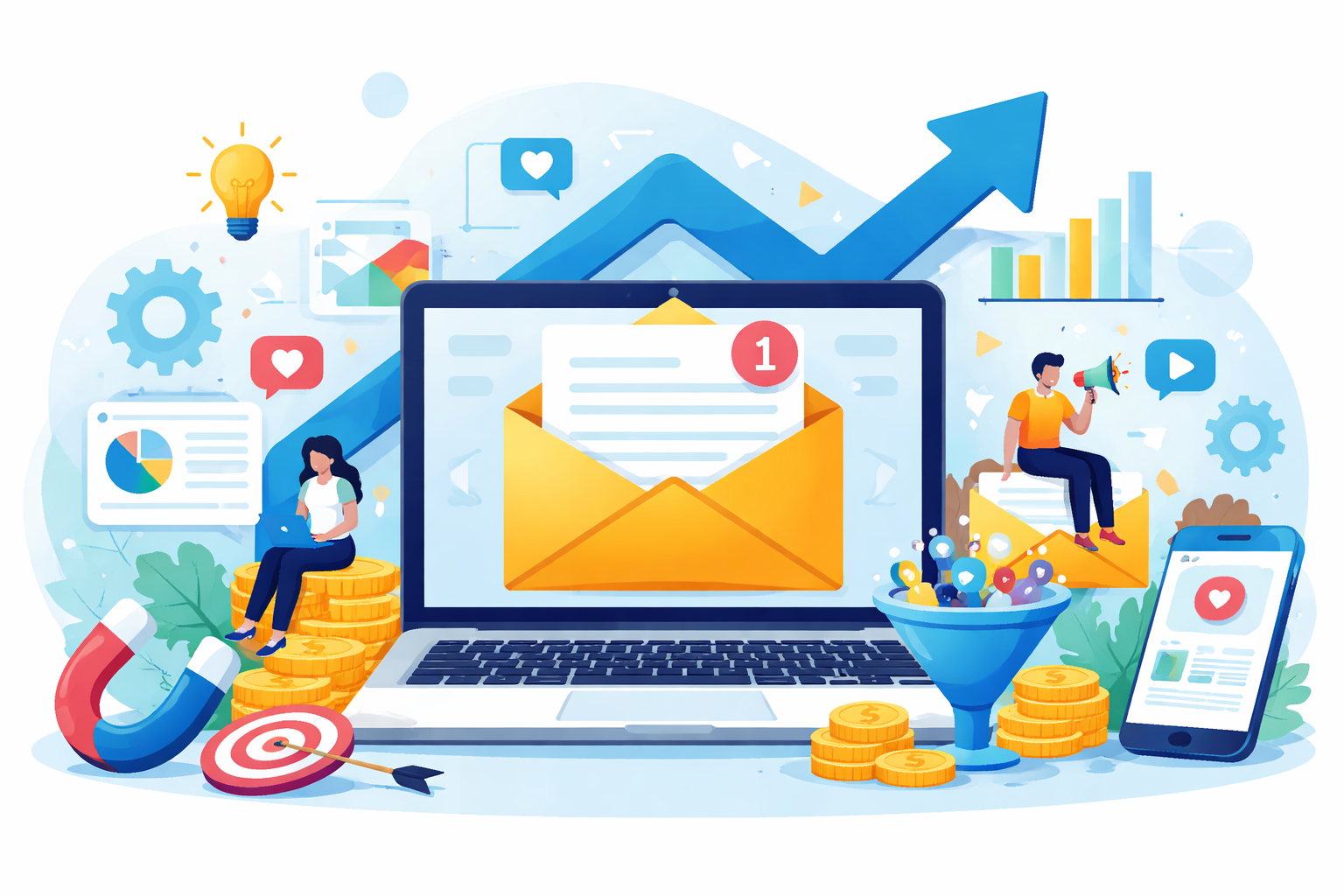
Email marketing continues to be one of the most powerful tools in a marketer’s arsenal, even as new digital channels emerge. In 2026, the landscape has evolved significantly—driven by artificial intelligence, stricter privacy regulations, and increasingly sophisticated customer expectations. Businesses that want to stay competitive must go beyond traditional tactics and adopt smarter, more personalized, and>This blog explores the top email marketing strategies you should implement in 2026 to increase conversions, build stronger customer relationships, and maximize ROI.
Proven Email Marketing Tips for Higher Conversions in 2026
Hyper-Personalization Using AI and Behavioral Data
Generic email blasts are no longer effective. Today’s consumers expect emails tailored specifically to their interests, behaviors, and preferences.
Hyper-personalization goes beyond inserting a recipient’s first name. It involves analyzing browsing history, purchase behavior, engagement patterns, and even predictive intent to deliver highly relevant content.
Key tactics:
- Use AI tools to segment audiences dynamically
- Send product recommendations based on past purchases
- Personalize subject lines, content, and CTAs for each user
Impact: Personalized emails can significantly boost open rates and conversions because they resonate more deeply with recipients.
Advanced Segmentation for Precision Targeting
Segmentation is not new, but in 2026, it has become far more sophisticated. Instead of basic demographic segmentation, marketers now use behavioral, psychographic, and lifecycle-based segmentation.
Examples of advanced segmentation:
- Engagement level (active vs. inactive subscribers)
- Purchase frequency (one-time buyers vs. loyal customers)
- Funnel stage (awareness, consideration, decision)
Best practice: Create micro-segments and craft tailored campaigns for each group. This ensures that your messaging is always relevant and timely.
Interactive Emails for Higher Engagement
Static emails are losing their appeal. Interactive elements are now a game-changer for increasing engagement and conversions.
Popular interactive features:
- Polls and surveys
- Image carousels
- Embedded videos
- Product sliders
- Add-to-cart functionality directly within the email
Why it works: Interactive emails reduce friction by allowing users to engage without leaving their inbox, leading to higher click-through and conversion rates.
Mobile-First Email Design
With the majority of users checking emails on mobile devices, optimizing for mobile is no longer optional—it’s essential.
Mobile optimization tips:
- Use responsive design templates
- Keep subject lines short and impactful
- Use large, tappable buttons
- Ensure fast loading times
Pro tip: Test your emails across multiple devices and screen sizes to ensure a seamless experience.
AI-Powered Send Time Optimization
Timing plays a crucial role in email performance. Sending emails when your audience is most likely to engage can dramatically improve results.
In 2026, AI tools analyze user behavior to determine the best time to send emails for each individual subscriber.
Benefits:
- Higher open rates
- Better engagement
- Increased conversions
Implementation: Use email platforms with predictive send-time capabilities to automate this process.
Privacy-First Email Marketing
With increasing data privacy regulations, transparency and trust are more important than ever.
Consumers are more aware of how their data is used, and businesses must adapt accordingly.
Best practices:
- Clearly communicate how user data is collected and used
- Use permission-based marketing (opt-ins)
- Provide easy unsubscribe options
- Avoid over-collection of data
Result: Building trust leads to stronger relationships and long-term customer loyalty.
Automation and Smart Workflows
Automation continues to be a cornerstone of effective email marketing, but in 2026, it’s smarter and more intuitive.
Essential automated workflows:
- Welcome series for new subscribers
- Abandoned cart emails
- Re-engagement campaigns
- Post-purchase follow-ups
Enhancement: Use AI to trigger emails based on real-time behavior rather than fixed schedules.
Outcome: Automation ensures timely communication, reduces manual effort, and increases conversions.
Compelling Subject Lines and Preview Text
Your subject line is the first impression—and often the deciding factor in whether an email gets opened.
Tips for high-performing subject lines:
- Create urgency (e.g., “Last chance”)
- Use curiosity-driven language
- Keep it concise (6–10 words)
- Personalize when possible
Don’t forget preview text: It complements your subject line and provides additional context to entice users to open the email.
Value-Driven Content Strategy
Consumers are no longer interested in purely promotional emails. They want value.
Types of value-driven content:
- Educational resources
- How-to guides
- Industry insights
- Exclusive offers
- Personalized recommendations
Strategy: Follow the 80/20 rule—80% value, 20% promotion.
Benefit: Providing value builds trust and positions your brand as an authority.
A/B Testing and Continuous Optimization
Email marketing success is not a one-time effort—it requires continuous testing and improvement.
What to test:
- Subject lines
- Email design
- CTA placement and wording
- Send times
- Content formats
Approach: Test one variable at a time to accurately measure its impact.
Result:>Omnichannel Integration
Email marketing should not operate in isolation. Integrating it with other channels creates a seamless customer experience.
Examples:
- Sync email campaigns with social media ads
- Use email data to personalize website experiences
- Retarget email subscribers with ads
Outcome: A unified approach increases touchpoints and reinforces your messaging, leading to higher conversions.
Focus on Email Accessibility
Accessibility is becoming a priority in digital marketing. Ensuring that your emails are accessible to all users—including those with disabilities—can expand your reach and improve engagement.
Accessibility tips:
- Use alt text for images
- Ensure proper color contrast
- Use clear and simple language
- Structure content with headings
Impact: Accessible emails provide a better user experience and demonstrate inclusivity.
Leveraging User-Generated Content (UGC)
User-generated content adds authenticity and builds trust.
Examples:
- Customer reviews and testimonials
- Social media posts from users
- Case studies
Why it works: People trust other customers more than brands, making UGC a powerful conversion driver.
Minimalist and Clean Email Design
Cluttered emails can overwhelm readers and reduce engagement.
Design principles:
- Use white space effectively
- Focus on one primary message
- Limit the number of CTAs
- Use clear visual hierarchy
Result: A clean design improves readability and guides users toward taking action.
Real-Time Data and Dynamic Content
Dynamic content allows emails to update in real time based on user behavior or external data.
Use cases:
- Live product availability
- Countdown timers for offers
- Location-based content
Advantage: Keeps your emails relevant and timely, increasing the likelihood of conversions.
Conclusion
Email marketing in 2026 is smarter, more personalized, and deeply integrated with advanced technologies. Success is no longer about sending mass emails—it’s about delivering the right message, to the right person, at the right time.
By embracing hyper-personalization, leveraging AI, prioritizing privacy, and continuously optimizing your campaigns, you can significantly increase your conversion rates and build lasting relationships with your audience.
The future of email marketing is not just about communication—it’s about connection. Businesses that understand and implement these strategies will not only stay ahead of the curve but also turn their email campaigns into powerful conversion engines.
📂 Categories
- Digital Marketing