 Home
Home Partners
 Clients
 Career
 Contact Us
How to Build a Brand on Amazon Instead of Just Selling Products?
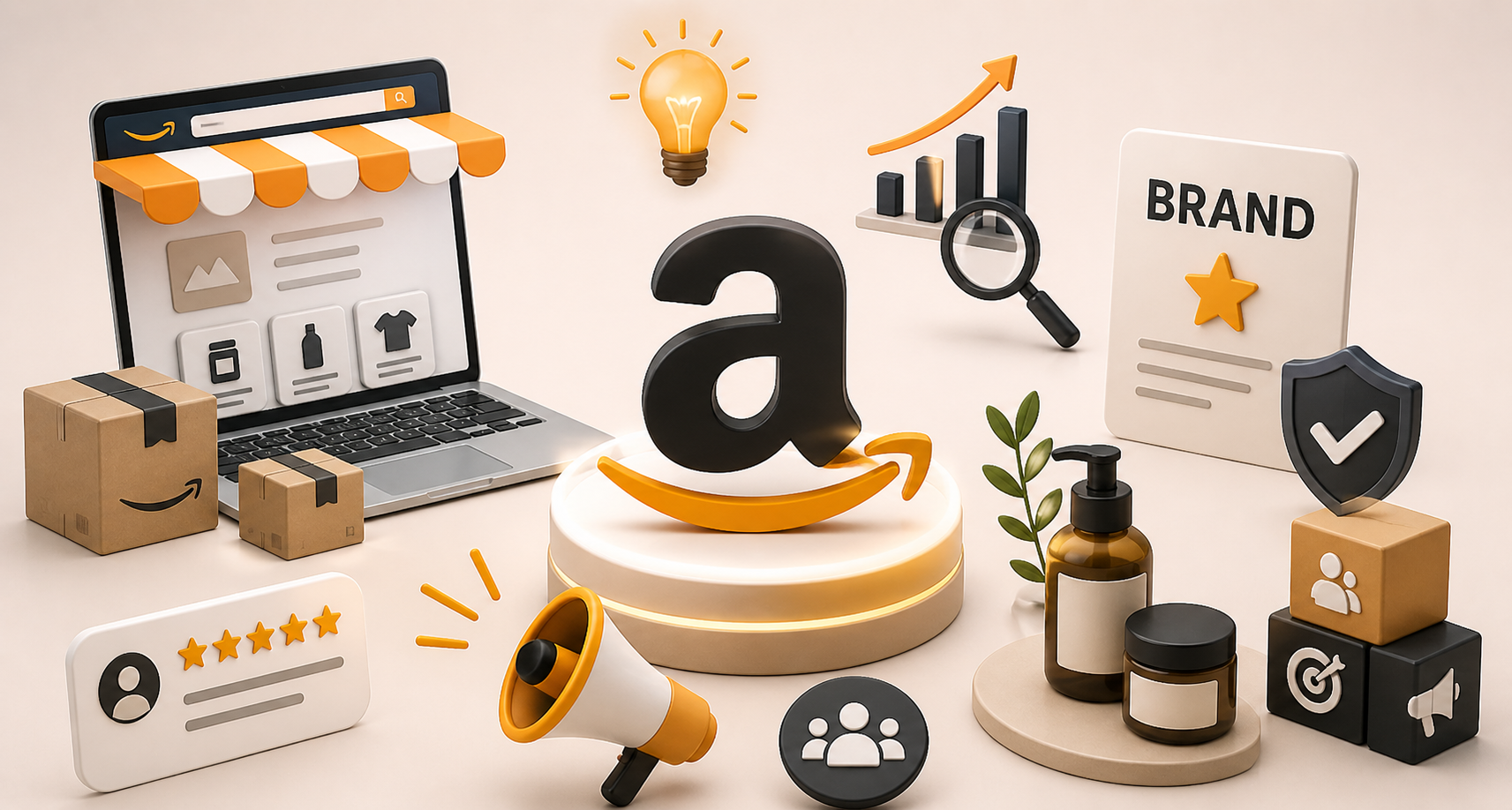
Selling on Amazon has become one of the fastest ways to enter e-commerce. Thousands of sellers list products every day, hoping for quick sales and short-term profits. But only a small percentage of them actually succeed in the long run. The difference is simple: most sellers sell products, while successful sellers build brands.
If you are only focusing on listing products and competing on price, you are entering a race to the bottom. However, when you build a brand on Amazon, you create long-term value, customer trust, and repeat purchases. In today’s competitive marketplace, branding is not optional—it is the key to survival and growth.
This article will guide you step-by-step on how to transform your Amazon business from a simple product-selling model into a powerful brand-building machine.
Understanding the Difference: Selling Products vs Building a Brand
Before diving into strategies, it is important to understand the core difference between the two approaches.
When you sell products on Amazon:
- You compete mainly on price
- Customers do not remember your store
- Sales depend heavily on ads and discounts
- Loyalty is almost zero
When you build a brand on Amazon:
- Customers recognize and trust your name
- You can charge premium pricing
- Repeat purchases increase naturally
- You are less dependent on ads over time
A brand is not just a logo or packaging. It is the perception customers have about your business.
From Idea to Brand: A Complete Amazon Selling Strategy
Step 1: Choose a Clear Brand Identity
The foundation of any strong brand starts with identity. This includes:
- Brand name
- Logo and color theme
- Product category focus
- Target audience
Instead of selling random products, choose a niche. For example:
- Fitness accessories
- Home organization products
- Skincare tools
- Eco-friendly lifestyle goods
A focused niche helps you build authority faster and makes your brand memorable.
Ask yourself:
“What problem am I solving, and for whom?”
Once you answer this, your brand direction becomes much clearer.
Step 2: Use Private Label Instead of Generic Products
One of the biggest mistakes new sellers make is reselling already popular products without customization. This leads to intense competition and low profit margins.
Instead, focus on private labeling, which means:
- You source products from manufacturers
- You sell them under your own brand name
- You improve packaging, design, or features
Private label products give you:
- Control over pricing
- Unique identity in the marketplace
- Higher profit margins
- Long-term scalability
Even small improvements in design or packaging can make your product stand out.
Step 3: Build a Professional Product Listing
Your Amazon listing is your digital storefront. It is often the first interaction customers have with your brand.
A strong listing should include:
1. Optimized Title
Include:
- Brand name
- Primary keyword
- Key benefit
2. High-Quality Images
Use:
- White background images
- Lifestyle images showing usage
- Infographics explaining benefits
3. Bullet Points
Focus on:
- Features
- Benefits
- Emotional value
4. Product Description
Tell a story instead of just listing features. Explain how the product improves the customer’s life.
A well-optimized listing not only increases conversions but also builds brand trust.
Step 4: Invest in Branding Through Packaging
Packaging plays a huge role in brand perception. Many sellers ignore it, but customers immediately judge quality based on packaging.
Good branding packaging includes:
- Logo on box or wrapper
- Branded thank-you cards
- Consistent color themes
- Premium unboxing experience
When a customer receives a well-packaged product, they are more likely to:
- Leave positive reviews
- Reorder from your brand
- Recommend it to others
This turns one-time buyers into loyal customers.
Step 5: Focus on Customer Experience, Not Just Sales
Amazon is a customer-first platform. Brands that prioritize customer experience always win in the long term.
To improve experience:
- Respond quickly to customer queries
- Provide clear usage instructions
- Offer hassle-free returns
- Maintain product quality consistency
Happy customers lead to:
- Better ratings
- Higher rankings in search results
- Increased organic traffic
Your goal should not be just selling—it should be solving customer problems.
Step 6: Build Trust Through Reviews and Ratings
Reviews are one of the strongest ranking factors on Amazon. But more importantly, they build trust.
Ways to increase reviews:
- Deliver consistent product quality
- Use Amazon’s automated review request system
- Provide excellent packaging and support
- Include polite feedback request inserts
Avoid shortcuts like fake reviews, as they can harm your account permanently.
A brand with strong reviews naturally stands out from competitors.
Step 7: Use Amazon Advertising Strategically
Advertising is essential, but it should not be your only growth driver.
Use Amazon PPC for:
- Launching new products
- Increasing visibility
- Testing keywords
However, a brand-focused strategy means:
- Gradually reducing dependency on ads
- Improving organic ranking through SEO
- Increasing repeat customers
A strong brand reduces your long-term advertising cost.
Step 8: Create a Story Around Your Brand
People don’t connect with products—they connect with stories.
Your brand story can include:
- Why you started the business
- What problem you are solving
- Your mission and values
- Your commitment to quality
This story can be used in:
- Product descriptions
- A+ Content
- Brand Store page
A strong story creates emotional connection, which increases loyalty.
Step 9: Expand Beyond a Single Product
Many sellers fail because they depend on one product. A real brand grows through a product ecosystem.
Once your first product succeeds:
- Launch related products
- Expand your niche gradually
- Maintain consistent branding across all listings
For example:
If you sell yoga mats, you can expand into:
- Yoga blocks
- Resistance bands
- Fitness accessories
This increases customer lifetime value.
Step 10: Build a Long-Term Vision
Building a brand on Amazon is not a quick process. It requires patience, consistency, and strategy.
Short-term sellers focus on:
- Quick sales
- Discount wars
- Temporary success
Brand builders focus on:
- Trust
- Quality
- Customer loyalty
- Long-term growth
Over time, brands outperform sellers in every metric—profit, stability, and scalability.
Final Thoughts
Building a brand on Amazon is a long-term strategy that requires patience, consistency, and attention to detail. It is not about quick wins or single-product success—it is about creating a recognizable identity that customers trust and return to.
When you shift your mindset from “selling products” to “building a brand,” everything changes. Your decisions become more strategic, your marketing becomes more focused, and your business becomes more scalable.
In a marketplace where thousands of sellers compete for attention, brands win—not products.
If you focus on identity, quality, storytelling, and customer experience, Amazon stops being just a selling platform and becomes a powerful engine for brand growth.