
 Home
Home Partners
 Clients
 Career
 Contact Us
How Does Ecommerce Digital Marketing Increase Sales?
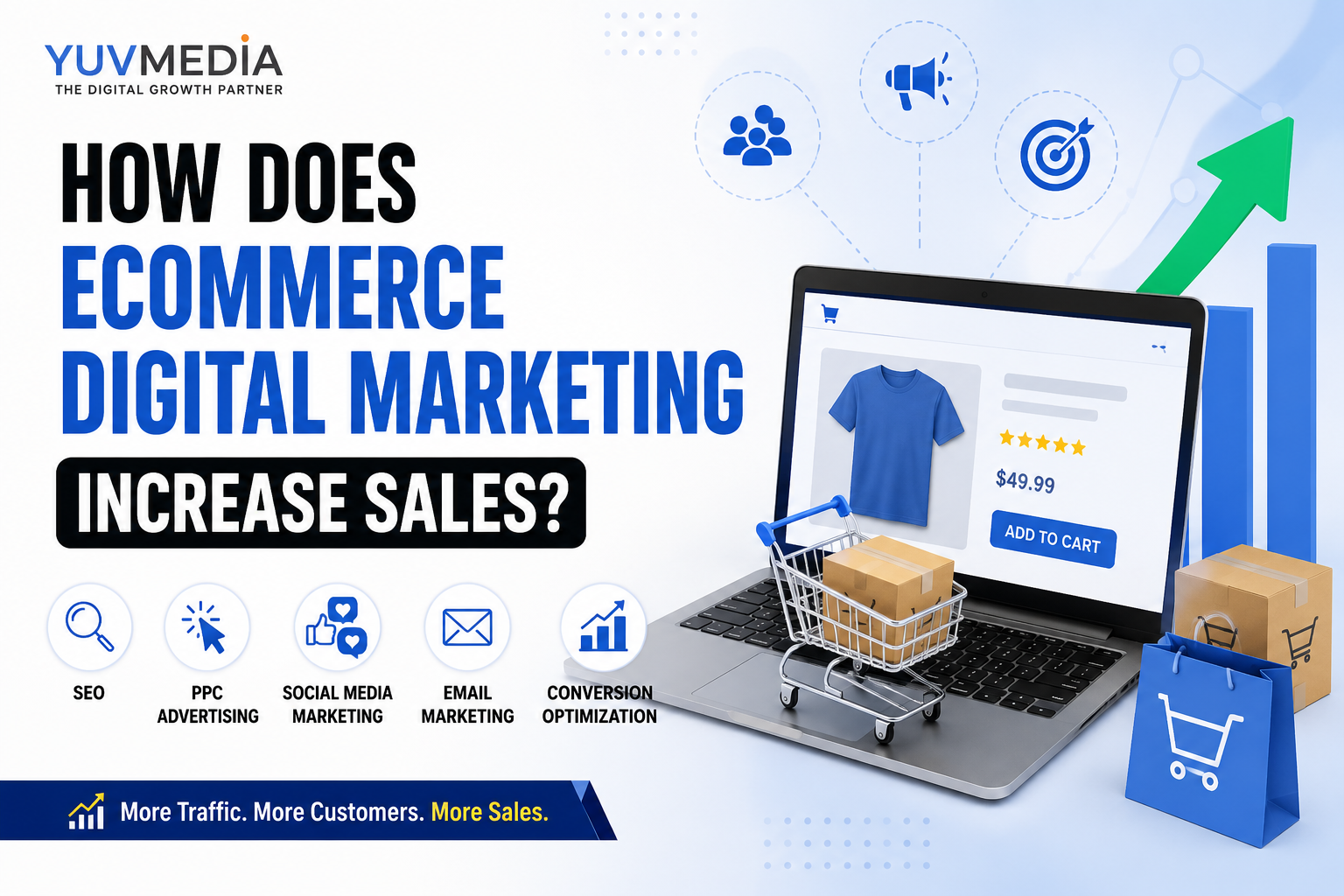
How Does Ecommerce Digital Marketing Increase Sales?
Ecommerce digital marketing increases sales by attracting qualified traffic, improving search engine visibility, engaging potential customers across multiple digital channels, and optimizing the buying journey. Through strategies like SEO, PPC advertising, social media marketing, email marketing, and conversion rate optimization, businesses can increase website traffic, generate more leads, improve conversion rates, and build long-term customer loyalty.
Introduction
The ecommerce industry has experienced tremendous growth over the last decade, creating endless opportunities for businesses to sell products online. However, increasing competition also means that simply launching an ecommerce website is no longer enough to generate consistent sales.
Consumers today research products, compare prices, read reviews, and interact with brands across multiple digital platforms before making a purchase. This changing customer behavior makes ecommerce digital marketing one of the most important factors for business success.
An effective ecommerce digital marketing strategy helps businesses reach the right audience at the right time, improve online visibility, build customer trust, and guide potential buyers from product discovery to purchase.
Whether you are running a startup, a D2C brand, or an established online store, digital marketing provides measurable strategies that increase both short-term revenue and long-term business growth.
What Is Ecommerce Digital Marketing?
Ecommerce digital marketing is the process of promoting products and online stores through digital channels such as search engines, social media platforms, email marketing, paid advertising, content marketing, and influencer collaborations.
The primary objectives of ecommerce digital marketing are:
- Increase website traffic
- Generate qualified leads
- Improve online visibility
- Increase product sales
- Build customer trust
- Improve customer retention
- Maximize Return on Investment (ROI)
Unlike traditional marketing, ecommerce digital marketing allows businesses to track customer behavior and optimize campaigns using real-time data.
Why Is Digital Marketing Important for Ecommerce Businesses?
Digital marketing is important because it helps ecommerce businesses reach customers where they spend most of their time—online.
Today's customers discover products through Google searches, Instagram Reels, YouTube videos, Facebook ads, influencer recommendations, and email campaigns. Without a digital marketing strategy, businesses miss valuable opportunities to connect with potential buyers.
Key benefits include:
- Better brand visibility
- More qualified website traffic
- Higher conversion rates
- Lower customer acquisition costs
- Improved customer engagement
- Increased repeat purchases
- Sustainable business growth
How Does Ecommerce Digital Marketing Increase Sales?
1. It Brings High-Intent Customers to Your Website
One of the biggest advantages of ecommerce digital marketing is its ability to attract people who are already searching for products similar to yours.
This happens through:
- Search Engine Optimization (SEO)
- Google Shopping Ads
- Pay-Per-Click (PPC) campaigns
- Content Marketing
- Social Media Marketing
Instead of attracting random visitors, digital marketing focuses on users with buying intent, making them far more likely to convert into customers.
Targeted traffic leads to higher conversions because visitors are already interested in purchasing similar products.
2. Improves Search Engine Rankings
More than half of online shopping journeys begin with a search engine.
SEO helps ecommerce websites rank for relevant keywords by optimizing:
- Product pages
- Category pages
- Product descriptions
- Meta titles
- Internal linking
- Website speed
- Mobile responsiveness
- Structured data (Schema)
Higher rankings increase visibility, generate free organic traffic, and reduce dependence on paid advertising.
Better SEO rankings increase organic traffic, resulting in more potential customers and higher sales.
3. Reaches the Right Audience with Precision Targeting
Digital marketing platforms allow businesses to target customers based on:
- Age
- Gender
- Location
- Shopping interests
- Purchase behavior
- Website activity
- Device usage
This ensures marketing budgets are spent on audiences most likely to buy.
Precision targeting improves conversion rates while reducing advertising costs.
4. Builds Customer Trust
Customers prefer purchasing from brands they recognize and trust.
Digital marketing builds credibility through:
- Customer reviews
- Testimonials
- Educational blog articles
- Video content
- Social proof
- Case studies
- Consistent branding
A trustworthy brand experiences higher conversion rates because customers feel more confident in their buying decisions.
5. Uses Social Media to Drive Sales
Social media is no longer just a branding platform—it has become a major sales channel.
Businesses use platforms like Instagram, Facebook, Pinterest, LinkedIn and YouTube to:
- Showcase products
- Run promotional campaigns
- Collaborate with influencers
- Launch new collections
- Build customer communities
Social commerce allows customers to discover products naturally while browsing their favorite platforms.
6. Increases Sales Through Email Marketing
Email marketing continues to deliver one of the highest returns on investment.
Businesses use automated emails to:
- Recover abandoned carts
- Recommend products
- Offer exclusive discounts
- Launch new collections
- Reward loyal customers
Personalized emails encourage repeat purchases while strengthening customer relationships.
7. Reduces Cart Abandonment
Many shoppers leave products in their shopping carts without completing the purchase.
Digital marketing helps recover these lost sales using:
- Automated reminder emails
- Remarketing ads
- Exit-intent popups
- Limited-time offers
- Personalized discount codes
Recovering abandoned carts directly increases overall revenue.
8. Optimizes the Customer Journey
Driving traffic alone isn't enough.
Successful ecommerce businesses continuously improve the shopping experience by optimizing:
- Website speed
- Navigation
- Mobile responsiveness
- Product images
- Product descriptions
- Checkout process
- Secure payment gateways
A smoother buying journey leads to higher conversion rates.
9. Encourages Repeat Purchases
Retaining existing customers is significantly more cost-effective than acquiring new ones.
Digital marketing encourages customer loyalty through:
- Loyalty programs
- Email automation
- Referral campaigns
- Personalized recommendations
- Seasonal offers
- Membership rewards
Repeat customers typically spend more and become long-term brand advocates.
10. Uses Data to Improve Performance
Digital marketing provides valuable insights into customer behavior.
Businesses can monitor:
- Website traffic
- Sales performance
- Conversion rates
- Average Order Value (AOV)
- Customer Acquisition Cost (CAC)
- Customer Lifetime Value (CLV)
- Return on Ad Spend (ROAS)
This data enables continuous optimization, resulting in better campaign performance and increased profitability.
Best Ecommerce Digital Marketing Strategies
For maximum sales growth, businesses should combine multiple digital marketing channels:
- Search Engine Optimization (SEO)
- Google Ads (PPC)
- Content Marketing
- Social Media Marketing
- Email Marketing
- Influencer Marketing
- Video Marketing
- Affiliate Marketing
- Conversion Rate Optimization (CRO)
- Remarketing Campaigns
An integrated strategy delivers the best long-term results.
Frequent Asked Questions?
How does digital marketing increase ecommerce sales?
Digital marketing increases ecommerce sales by attracting targeted visitors, improving brand visibility, optimizing customer experiences, and converting more website visitors into paying customers.
Which digital marketing strategy works best for ecommerce?
A combination of SEO, Google Ads, email marketing, social media marketing, content marketing, and conversion rate optimization provides the best results for most ecommerce businesses.
Is SEO necessary for ecommerce websites?
Yes. SEO helps ecommerce websites rank higher in search results, bringing qualified organic traffic and reducing dependence on paid advertising.
What is the fastest way to increase ecommerce sales?
The fastest approach combines Google Ads, social media advertising, email marketing, and remarketing campaigns while improving website conversion rates.
How long does ecommerce digital marketing take to show results?
Paid advertising can generate immediate traffic, while SEO and content marketing generally produce sustainable results within three to six months.
Key Takeaways
- Ecommerce digital marketing helps attract high-intent customers.
- SEO improves search rankings and organic traffic.
- PPC delivers immediate visibility and qualified leads.
- Social media builds brand awareness and engagement.
- Email marketing increases repeat purchases.
- CRO improves website conversions.
- Data analytics helps optimize campaigns for better ROI.
- A multi-channel strategy delivers sustainable long-term growth.
Conclusion
Ecommerce digital marketing is more than just promoting products online—it is a comprehensive strategy that helps businesses attract qualified customers, improve online visibility, build trust, and maximize conversions. By combining SEO, paid advertising, social media marketing, email automation, content creation, and conversion rate optimization, businesses can create a seamless customer journey that drives both immediate sales and long-term loyalty.
As online competition continues to grow, businesses that invest in a rel="noopener noreferrer" target="_blank">https://yuvmedia.com/
📂 Categories
- Digital Marketing
- eCommerce