 Home
Home Partners
 Clients
 Career
 Contact Us
Social Media Marketing for Ecommerce: A Complete Guide to Boost Online Sales
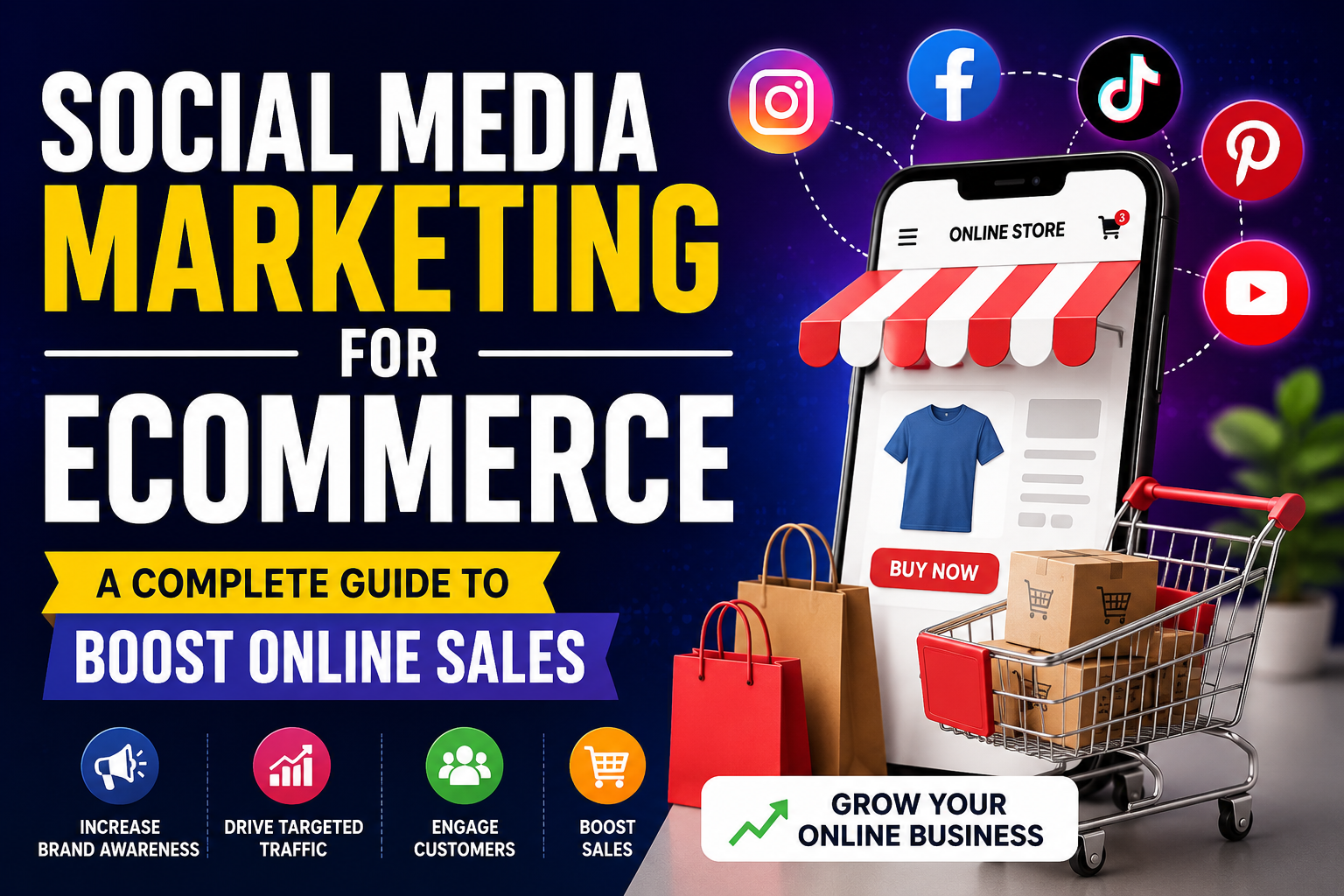
Social media marketing for ecommerce is the process of promoting products, engaging customers, and increasing online sales through platforms like Instagram, Facebook, TikTok, Pinterest, YouTube, and LinkedIn. A well-planned ecommerce social media marketing strategy helps businesses increase brand awareness, drive qualified website traffic, improve customer engagement, and boost conversions using both organic content and paid advertising.
Introduction
The ecommerce industry has grown rapidly over the past few years, making competition tougher than ever. Simply launching an online store is no longer enough to attract customers or generate consistent sales. Today's consumers spend hours on social media discovering products, reading reviews, watching videos, and interacting with brands before making a purchase. This shift in consumer behavior has made social media marketing for ecommerce one of the most effective ways to grow an online business.
Whether you own a startup, a D2C brand, or an established ecommerce website, investing in ecommerce social media marketing can help you reach the right audience, build trust, and increase sales. By combining engaging content, social media advertising for ecommerce, influencer partnerships, and social commerce, businesses can create meaningful customer experiences that lead to long-term growth.
What Is Social Media Marketing for Ecommerce?
Social media marketing for ecommerce is the practice of promoting products and services through social media platforms to increase brand visibility, drive traffic to an ecommerce website, generate qualified leads, and improve online sales.
Unlike traditional advertising, digital marketing for ecommerce allows businesses to connect directly with customers through engaging content, videos, live sessions, stories, and personalized advertising campaigns. It also provides valuable insights into customer behavior, helping brands optimize their ecommerce marketing strategy for better performance.
Popular platforms include:
- YouTube
Each platform offers unique opportunities to reach different audiences and support ecommerce business growth.
Why Is Social Media Marketing Important for Ecommerce?
Social media marketing for ecommerce is important because it helps businesses connect with customers where they spend most of their time online. It improves brand awareness, increases customer engagement, and encourages shoppers to visit your online store.
Key Benefits
- Increases brand visibility
- Drives qualified website traffic
- Builds customer trust
- Improves customer engagement
- Generates quality leads
- Increases ecommerce sales
- Supports customer retention
- Delivers measurable marketing ROI
A strong ecommerce social media strategy helps businesses stay competitive while creating lasting relationships with customers.
How Does Social Media Marketing Increase Ecommerce Sales
A well-executed social media marketing for ecommerce strategy attracts potential buyers, promotes products, and encourages customers to complete purchases. By combining organic content with social media advertising for ecommerce, businesses can increase conversions and maximize revenue.
1. Builds Brand Awareness
Consistent posting introduces your products to new audiences. High-quality images, videos, reels, and stories help strengthen your ecommerce branding and improve recognition.
2. Drives Qualified Traffic
Sharing valuable content and running targeted campaigns encourage users to visit your ecommerce website. Visitors arriving through relevant social media campaigns are more likely to convert into paying customers.
3. Increases Customer Engagement
Responding to comments, direct messages, and reviews builds trust and creates stronger relationships. Better ecommerce customer engagement often leads to higher customer loyalty and repeat purchases.
4. Supports Social Commerce
Modern platforms allow customers to browse and purchase products without leaving the app. Social commerce simplifies the buying process and improves the overall shopping experience.
5. Promotes Products Effectively
Businesses can launch new products, announce discounts, and showcase customer testimonials through engaging content. This helps improve online store marketing while increasing product visibility.
Best Social Media Platforms for Ecommerce
Choosing the right platform depends on your target audience and business goals.
Instagram Marketing for Ecommerce
Instagram is one of the most effective platforms for fashion, beauty, food, fitness, and lifestyle brands. Features like Reels, Stories, Shopping, and influencer collaborations help businesses reach more customers and increase ecommerce sales.
Facebook Marketing for Ecommerce
Facebook remains a powerful platform for ecommerce advertising, community building, retargeting campaigns, and customer support. Facebook Ads allow businesses to target users based on interests, demographics, and shopping behavior.
Pinterest Marketing for Ecommerce
Pinterest is ideal for home décor, fashion, DIY, travel, and lifestyle businesses. Users often visit Pinterest with buying intent, making it an excellent platform for driving qualified traffic.
YouTube Marketing for Ecommerce
Product reviews, tutorials, unboxing videos, and customer testimonials on YouTube help educate buyers, build trust, and improve conversion rates.
LinkedIn Marketing for Ecommerce
For B2B ecommerce businesses, LinkedIn supports networking, brand authority, and lead generation through professional content and industry insights.
Best Social Media Marketing Strategies for Ecommerce
Businesses looking to improve ecommerce marketing should combine multiple strategies instead of relying on a single platform.
Some of the most effective techniques include:
- Create high-quality visual content.
- Publish content consistently using a content calendar.
- Optimize posts with relevant keywords and hashtags.
- Collaborate with influencers in your niche.
- Run targeted social media advertising for ecommerce.
- Encourage user-generated content and customer reviews.
- Use short-form videos to improve engagement.
- Monitor analytics and optimize campaigns regularly.
- Retarget website visitors using Meta Ads.
- Integrate email marketing with social campaigns for better customer retention.
A balanced combination of organic marketing and paid advertising produces the best long-term results.
Common Mistakes to Avoid
Many ecommerce businesses struggle because they make avoidable mistakes.
Common mistakes include:
- Posting inconsistently.
- Ignoring customer comments and messages.
- Using poor-quality product images.
- Targeting the wrong audience.
- Focusing only on sales instead of providing value.
- Not tracking campaign performance.
- Failing to optimize for mobile users.
Avoiding these issues can significantly improve your ecommerce marketing strategy and overall return on investment.
Frequently Asked Questions
Which social media platform is best for ecommerce?
Instagram, Facebook, TikTok, Pinterest, and YouTube are among the best platforms for ecommerce businesses. The ideal platform depends on your products and target audience.
Does social media marketing increase ecommerce sales?
Yes. Social media marketing for ecommerce helps businesses attract qualified traffic, build customer trust, improve engagement, and generate more online sales.
How often should ecommerce businesses post on social media?
Posting three to five high-quality posts per week while maintaining daily engagement is a good strategy for most ecommerce brands.
Is paid advertising necessary for ecommerce?
Paid advertising is not mandatory, but it helps businesses achieve faster visibility, attract targeted customers, and improve conversions alongside organic marketing efforts.
Can small ecommerce businesses benefit from social media marketing?
Absolutely. Even with a limited budget, small businesses can use ecommerce social media marketing to build brand awareness, connect with customers, and grow their online presence.
Key Takeaways
- Social media marketing for ecommerce increases brand awareness and online visibility.
- Engaging content helps drive qualified traffic to ecommerce websites.
- Social media advertising improves conversions and ecommerce sales.
- Social commerce makes online shopping easier and more convenient.
- Consistent posting and customer engagement build trust and loyalty.
- Tracking analytics helps businesses optimize campaigns and maximize ROI.
- A combination of organic content, paid advertising, and influencer marketing delivers sustainable ecommerce business growth.
Conclusion
Social media marketing for ecommerce has become an essential part of every successful ecommerce marketing strategy. By using platforms such as Instagram, Facebook, TikTok, Pinterest, YouTube, and LinkedIn, businesses can increase brand awareness, attract qualified customers, and generate consistent online sales. Combining engaging content, social media advertising for ecommerce, influencer collaborations, and social commerce creates a seamless customer journey that improves conversions and builds long-term customer loyalty. Businesses that continuously analyze performance, adapt to changing trends, and deliver value through social media are better positioned to achieve sustainable ecommerce business growth in today's competitive digital marketplace.
📂 Categories
- eCommerce
- Social Media Marketing