
 Home
Home Partners
 Clients
 Career
 Contact Us
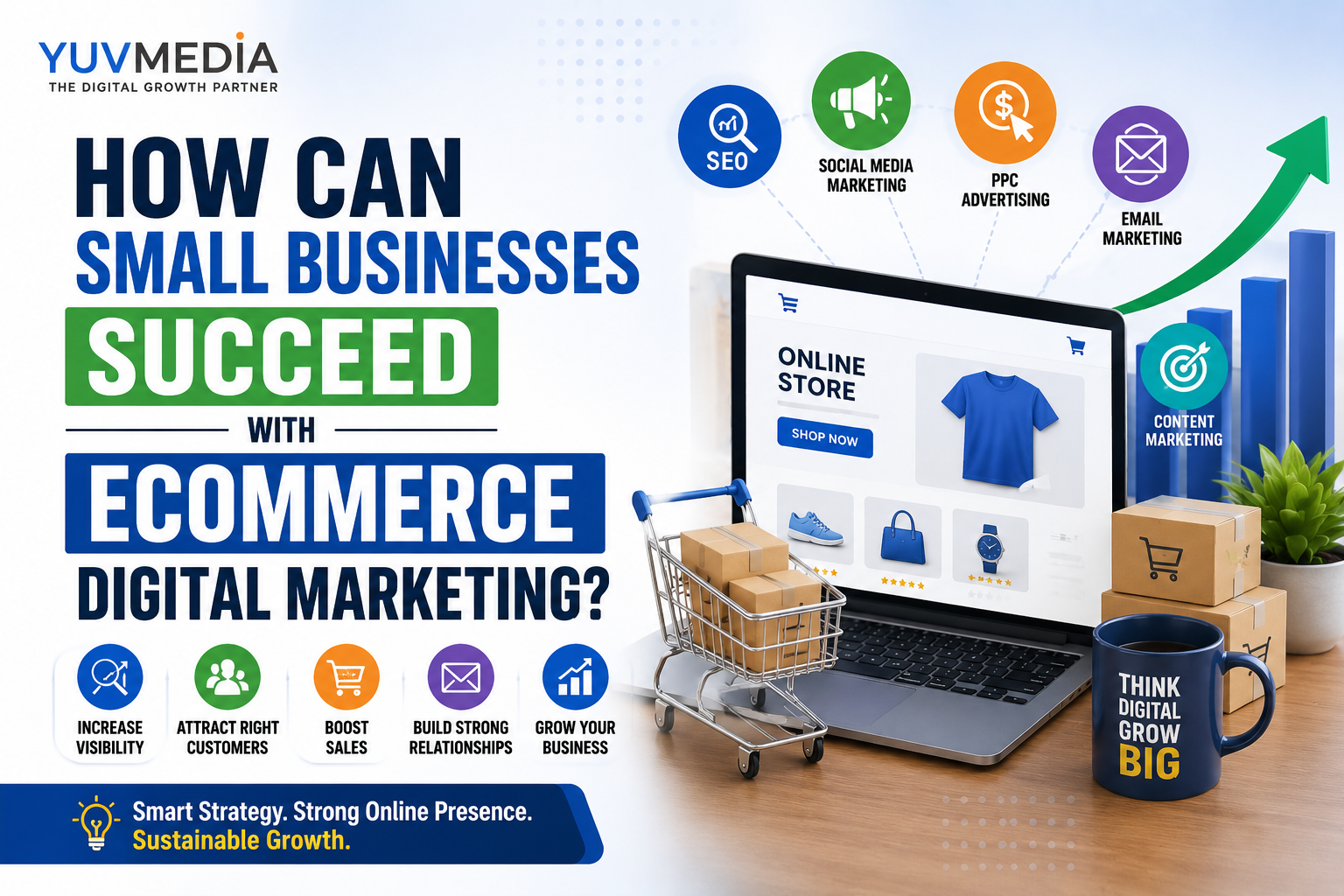
How Can Small Businesses Succeed with Ecommerce Digital Marketing?
Introduction
The rise of ecommerce has transformed how customers discover, evaluate, and purchase products. Today, even the smallest businesses have the opportunity to compete with larger brands by reaching customers through digital channels. However, success in ecommerce is not determined by business size—it is driven by the effectiveness of your digital marketing strategy.
Unlike traditional marketing, ecommerce digital marketing enables small businesses to connect directly with their target audience, measure campaign performance in real time, and optimize every stage of the customer journey. With the right approach, limited budgets can still produce significant results by focusing on high-impact marketing channels and customer-centric strategies.
This guide explains how small businesses can use ecommerce digital marketing to attract more customers, increase online sales, and build long-term brand loyalty.
Why Is Ecommerce Digital Marketing Important for Small Businesses?
Ecommerce digital marketing provides small businesses with a cost-effective way to compete in the online marketplace. It helps businesses increase visibility, reach potential customers, generate qualified leads, and build lasting relationships without requiring the large advertising budgets often associated with traditional marketing.
Key benefits include:
- Increased online visibility
- Better brand awareness
- Higher-quality website traffic
- Improved customer engagement
- Greater conversion rates
- Higher return on marketing investment (ROI)
- Long-term business growth
By using digital marketing strategically, small businesses can expand their reach beyond local markets and compete nationally or even globally.
1. Build a Professional and User-Friendly Ecommerce Website
Your website is the foundation of your digital marketing efforts. It should not only look professional but also provide a seamless shopping experience.
A successful ecommerce website should include:
- Mobile-responsive design
- Fast loading speed
- Secure payment gateways
- Easy navigation
- High-quality product images
- Detailed product descriptions
- Clear call-to-action (CTA) buttons
- Simple checkout process
A well-designed website increases customer trust and encourages visitors to complete their purchases.
A professional ecommerce website improves user experience, builds credibility, and increases conversion rates.
2. Invest in Search Engine Optimization (SEO)
Search Engine Optimization (SEO) helps small businesses attract customers who are actively searching for products or services online.
An effective ecommerce SEO strategy includes:
- Keyword research
- Product page optimization
- Category page optimization
- Technical SEO
- Image optimization
- Internal linking
- Local SEO (if applicable)
- Structured data (Schema Markup)
Unlike paid advertising, SEO delivers long-term organic traffic that continues to generate sales over time.
SEO helps small businesses increase online visibility, drive organic traffic, and reduce customer acquisition costs.
3. Use Content Marketing to Build Authority
Customers often research products before making purchasing decisions. Publishing valuable content positions your business as a trusted source of information.
Content marketing can include:
- Educational blog posts
- Buying guides
- Product comparisons
- Frequently Asked Questions (FAQs)
- Video tutorials
- Customer success stories
High-quality content also supports SEO by targeting informational search queries.
4. Leverage Social Media Marketing
Social media provides an excellent opportunity for small businesses to connect directly with their audience and showcase their products.
Popular platforms include:
- TikTok
- YouTube
Businesses can use these platforms to:
- Share product updates
- Publish educational content
- Engage with customers
- Run promotional campaigns
- Collaborate with influencers
- Build online communities
Consistent engagement strengthens brand awareness and encourages customer loyalty.
5. Run Targeted Pay-Per-Click (PPC) Advertising
Paid advertising allows small businesses to generate immediate visibility and attract qualified traffic.
Popular advertising platforms include:
- Google Ads
- Google Shopping Ads
- Meta Ads (Facebook & Instagram)
- LinkedIn Ads (B2B)
- YouTube Ads
Effective PPC campaigns focus on high-intent keywords, audience segmentation, and continuous optimization to maximize return on investment.
PPC advertising helps small businesses generate immediate traffic and sales while complementing long-term SEO efforts.
6. Build Customer Relationships with Email Marketing
Email marketing remains one of the most effective channels for customer retention and repeat purchases.
Successful email campaigns include:
- Welcome emails
- Product recommendations
- Abandoned cart reminders
- Seasonal promotions
- Exclusive discounts
- Customer loyalty rewards
- Educational newsletters
Personalized email communication keeps customers engaged and increases lifetime value.
7. Focus on Conversion Rate Optimization (CRO)
Generating website traffic is only valuable if visitors become customers.
Conversion Rate Optimization involves improving the shopping experience through:
- Faster page loading
- Simplified navigation
- Trust badges
- Customer reviews
- High-quality visuals
- Clear pricing
- Easy checkout process
Small improvements in usability can significantly increase sales without increasing advertising spend.
8. Use Data Analytics to Improve Marketing Performance
One of the greatest advantages of ecommerce digital marketing is the ability to measure campaign effectiveness.
Businesses should regularly monitor:
- Website traffic
- Bounce rate
- Conversion rate
- Average Order Value (AOV)
- Customer Acquisition Cost (CAC)
- Customer Lifetime Value (CLV)
- Return on Ad Spend (ROAS)
Analyzing this data helps identify opportunities to optimize campaigns and improve profitability.
9. Build Trust Through Customer Reviews and Social Proof
Modern consumers rely heavily on reviews before making purchasing decisions.
Encourage satisfied customers to leave reviews on:
- Your ecommerce website
- Google Business Profile
- Social media platforms
- Industry-specific review sites
Positive reviews strengthen credibility, improve search visibility, and increase customer confidence.
10. Create a Long-Term Ecommerce Growth Strategy
Digital marketing should not focus solely on short-term sales. Sustainable success requires continuous improvement.
Successful businesses regularly:
- Analyze customer behavior
- Update SEO strategies
- Test advertising campaigns
- Publish fresh content
- Improve website performance
- Introduce new marketing channels
- Personalize customer experiences
Long-term planning creates consistent growth and competitive advantage.
Common Challenges Small Businesses Face
Small businesses often encounter several obstacles when growing an ecommerce store, including:
- Limited marketing budgets
- Strong competition from established brands
- Low website traffic
- Poor search engine rankings
- Cart abandonment
- Limited brand awareness
These challenges can be overcome through a focused digital marketing strategy that prioritizes customer experience, targeted campaigns, and continuous optimization.
Best Ecommerce Digital Marketing Strategies for Small Businesses
To achieve sustainable growth, combine these proven strategies:
- Search Engine Optimization (SEO)
- Content Marketing
- Google Ads & Shopping Ads
- Social Media Marketing
- Email Marketing Automation
- Conversion Rate Optimization (CRO)
- Influencer Collaborations
- Remarketing Campaigns
- Customer Loyalty Programs
- Performance Analytics
Using multiple channels together creates a stronger and more effective marketing ecosystem.
Frequent Asked Questions?
Can small businesses succeed in ecommerce?
Yes. Small businesses can compete successfully by using strategic ecommerce digital marketing, delivering exceptional customer experiences, and targeting niche audiences with personalized campaigns.
Which digital marketing strategy is best for small ecommerce businesses?
A combination of SEO, content marketing, email marketing, social media marketing, and targeted PPC advertising provides the best balance of long-term growth and immediate results.
How much should a small business invest in ecommerce digital marketing?
Marketing budgets vary by industry and business goals. Many experts recommend allocating 7–12% of annual revenue to marketing, with a significant portion dedicated to digital channels for businesses focused on online growth.
Is SEO worth it for small ecommerce businesses?
Absolutely. SEO generates sustainable organic traffic, improves search visibility, and reduces reliance on paid advertising over time.
What is the biggest advantage of ecommerce digital marketing?
The biggest advantage is its ability to reach the right audience, measure performance accurately, and continuously optimize campaigns to increase sales and customer retention.
Key Takeaways
- Build a fast, secure, and user-friendly ecommerce website.
- Invest in SEO to generate long-term organic traffic.
- Use content marketing to educate customers and improve search rankings.
- Leverage social media to build brand awareness and engage audiences.
- Run targeted PPC campaigns for immediate visibility.
- Use email marketing to nurture leads and encourage repeat purchases.
- Optimize your website to improve conversions.
- Analyze performance data regularly to refine your marketing strategy.
- Focus on customer trust and long-term relationships to achieve sustainable growth.
Conclusion
Small businesses no longer need massive advertising budgets to compete in the ecommerce marketplace. With a strategic ecommerce digital marketing approach, they can attract highly targeted customers, build meaningful relationships, improve search visibility, and increase online sales.
Success comes from combining SEO, content marketing, paid advertising, social media engagement, email marketing, and conversion optimization into a unified strategy. By consistently analyzing customer behavior, adapting to market trends, and delivering exceptional shopping experiences, small businesses can establish a strong online presence and achieve sustainable growth in an increasingly competitive digital landscape.
📂 Categories
- Digital Marketing
- eCommerce