 Home
Home Partners
 Clients
 Career
 Contact Us
Why Your Business Needs a Modern ERP Strategy to Stay Competitive
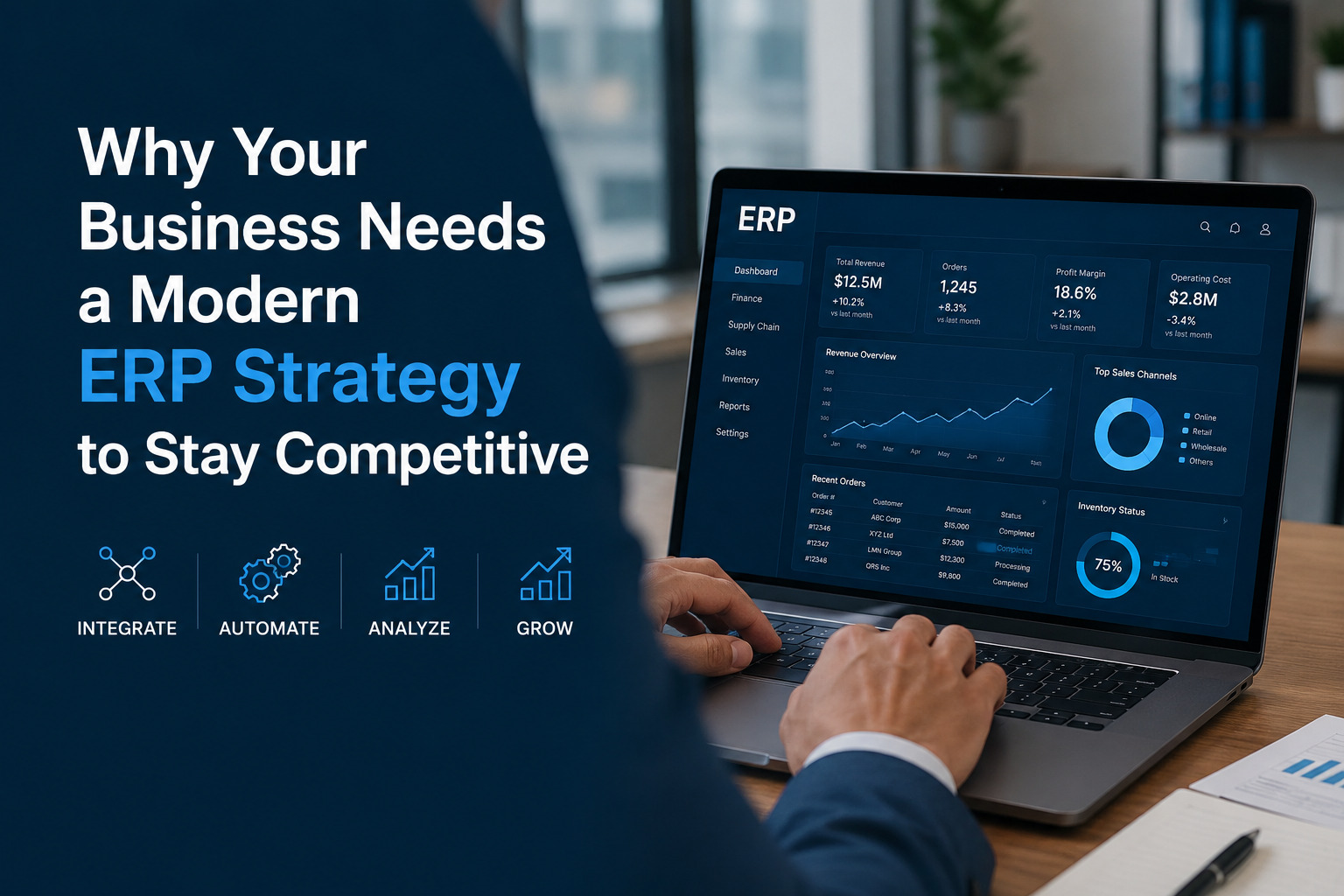
Running a company today often feels like trying to keep a dozen plates spinning at once. Between finance, HR, inventory, and customer relations, the complexity adds up quickly. In the early days, a few spreadsheets might get the job done. But as you scale, those isolated systems start to work against you. This is exactly where enterprise resource ERP solutions stop being an "optional" upgrade and start becoming a necessity for survival.
What Is Enterprise Resource Planning (ERP)?
At its core, enterprise resources planning is about breaking down the walls between your departments. It is a central nervous system for your business, connecting your accounting, operations, and HR into one cohesive platform. When you stop toggling between five different pieces of software, you get a "single source of truth." These ERP enterprise resource tools don't just store data; they provide the real-time visibility you need to make smart, fast decisions rather than guessing based on outdated reports.
Why Businesses Need Professional ERP Services
Many businesses eventually hit a "complexity wall." Your teams are working hard, but they’re bogged down by manual data entry or hunting for information buried in fragmented systems.
This is where professional ERP services change the game. By automating the repetitive stuff, you aren’t just saving time—you’re clearing the path for your team to focus on work that actually drives revenue. A solid strategy isn't just about software; it’s about:
- Operational Agility: Responding to market shifts in real-time.
- Data Integrity: Trusting your numbers because they aren't being manually moved between apps.
- Sustainable Scaling: Building a foundation that can handle growth without buckling.
The Role of Enterprise Resource Management
Effective enterprise resource management is often the unsung hero of a profitable company. When your processes and technology are in sync, you gain a level of transparency that was previously impossible. Leadership can spot a bottleneck in the supply chain or a spike in operational costs before it becomes a crisis. It turns your daily operations into a competitive advantage.
Partnering for Success: Consulting and Development
Implementing a new system is more of a business transformation than an IT project. That is why many leaders turn to ERP consulting services before committing to a platform. A good consultant doesn't just sell you a license; they pressure-test your workflows and identify exactly where the friction is.
And sometimes, off-the-shelf software isn't enough. If your business model has a unique edge or specific, complex requirements, ERP software development services become the better route. Custom features ensure the software adapts to how you do business, rather than forcing your team to bend their workflows to fit a rigid, pre-built system.
Conclusion
Investing in a modern system is an investment in your company’s ceiling—how high you can actually grow. Whether you are looking for ERP services to clean up your current mess or need custom development to build your competitive edge, the right strategy makes all the difference. Companies that prioritize these integrations today are simply better prepared to outpace the competition tomorrow.
Frequently Asked Questions
What exactly is an ERP? An ERP (Enterprise Resource Planning) system is a unified platform that connects key business functions—finance, inventory, HR, and operations—into one hub to boost efficiency.
What do ERP services cover? They generally include the full lifecycle: strategic consulting, platform selection, implementation, system customization, and ongoing technical support.
Why is enterprise resource management critical? It centralizes data, which eliminates manual errors, lowers operational costs, and gives management the clear visibility needed to make confident decisions.
What do ERP consulting services actually do? Consultants act as architects for your operations. They help you pick the right software, map out your current challenges, and ensure the deployment meets your specific business goals.
When should I look into ERP software development services? If your business has unique workflows or complex requirements that standard "out-of-the-box" software just can’t handle, custom development allows you to build features that fit your specific needs.
How do ERP enterprise resource tools help my bottom line? By automating manual tasks and providing real-time data, they reduce labor waste and prevent expensive errors, allowing your team to focus on high-value work.
📂 Categories
- ERP Services