
 Home
Home Partners
 Clients
 Career
 Contact Us
On-Page vs Off-Page SEO: What Matters More Today?
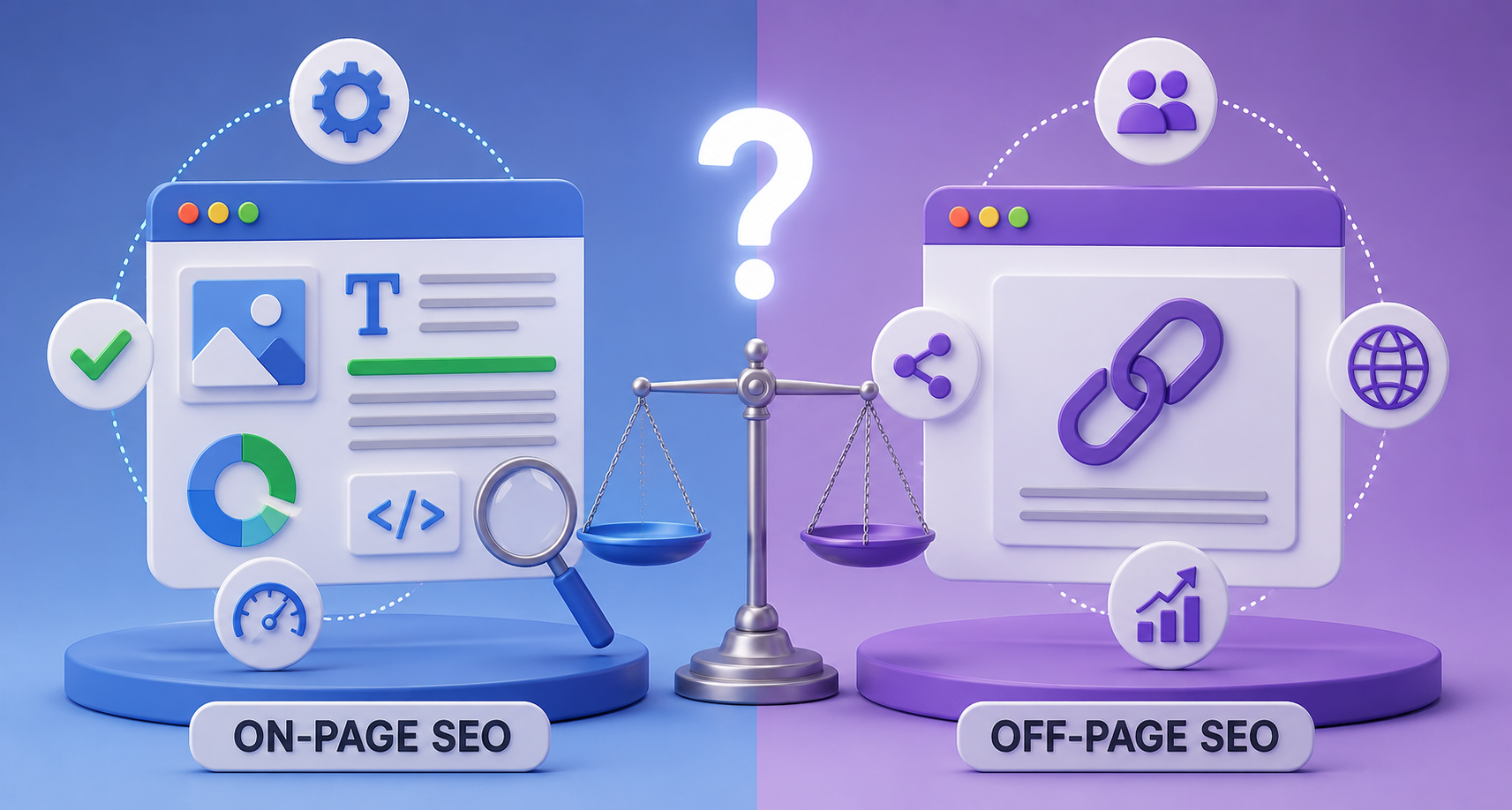
Search engine optimization (SEO) continues to evolve rapidly as Google and other search engines refine their algorithms to deliver more relevant, high-quality results. For businesses investing in digital growth, one question consistently arises: On-page vs off-page SEO—what matters more today?
The answer is not as simple as choosing one over the other. Both play essential roles in ranking success, but their importance and execution have shifted significantly in recent years. In this blog post, we’ll break down the differences between on-page and off-page SEO, explore how they work together, and help you understand where to focus your efforts—especially if you are considering professional SEO Services.
Understanding On-Page SEO
On-page SEO refers to all the optimization techniques applied directly on your website to improve its visibility in search engines. It focuses on both content and HTML source code.
Key Elements of On-Page SEO
High-Quality Content
Content remains the foundation of on-page SEO. Search engines prioritize pages that provide clear, relevant, and valuable information. Content should be well-structured, informative, and aligned with user intent.
Keyword Optimization
Strategic placement of keywords helps search engines understand your content. This includes using keywords in titles, headings, meta descriptions, and naturally throughout the content. Overstuffing, however, can harm rankings.
Title Tags and Meta Descriptions
These elements influence click-through rates from search results. A compelling title and description improve visibility and user engagement.
URL Structure
Clean, readable URLs improve indexing and user experience. For example:
www.example.com/seo-services is better than www.example.com/page?id=123
Internal Linking
Linking related pages within your website helps users navigate easily and distributes page authority across your site.
Mobile Optimization
With mobile-first indexing, websites must be responsive and optimized for mobile users.
Page Speed
A fast-loading website improves user experience and reduces bounce rates, which directly impacts rankings.
Image Optimization
Proper file names, alt text, and compressed images enhance accessibility and SEO performance.
Understanding Off-Page SEO
Off-page SEO refers to actions taken outside your website that influence your rankings. It primarily focuses on building authority, trust, and reputation.
Key Elements of Off-Page SEO
Backlinks
Backlinks are links from other websites pointing to your site. High-quality backlinks act as “votes of confidence” for your content.
Domain Authority Building
The more authoritative sites that link to you, the stronger your domain authority becomes.
Social Media Signals
While not a direct ranking factor, social media engagement increases visibility and drives traffic.
Guest Posting
Publishing content on reputable websites helps build backlinks and brand exposure.
Brand Mentions
Even unlinked mentions of your brand can contribute to SEO trust signals.
Influencer Outreach
Collaborations with influencers can increase reach and generate organic backlinks.
Online Reviews
Reviews on platforms like Google Business Profile influence local SEO rankings and trustworthiness.
What Matters More Today?
The real answer is: context matters more than preference.
However, in today’s SEO landscape, on-page SEO has become the foundation, while off-page SEO acts as the authority booster.
Let’s break this down further.
Why On-Page SEO Is More Important Than Ever?
Search engines have become extremely advanced in understanding content quality. This means that no amount of backlinks can compensate for poor on-page optimization.
Google Prioritizes User Intent
Modern algorithms focus heavily on search intent. If your content doesn’t satisfy user queries, it won’t rank—regardless of backlinks.
Content Quality Drives Rankings
High-quality, in-depth, and structured content is rewarded more than ever. Thin or irrelevant pages struggle to perform.
Technical SEO Is Critical
Core Web Vitals, mobile usability, and page speed are now ranking factors. These are purely on-page elements.
AI-Powered Search Evaluation
With AI-driven search updates, Google evaluates context, semantics, and topical authority. This strengthens the importance of well-optimized on-page content.
Why Off-Page SEO Still Matters?
Even though on-page SEO is crucial, off-page SEO is what helps build trust and authority in competitive industries.
Authority Signals Are Essential
Search engines still rely heavily on backlinks as indicators of credibility.
Competitive Niches Require Strong Backlinks
In industries like finance, health, or technology, ranking without backlinks is extremely difficult.
Brand Trust Is Built Externally
Mentions, reviews, and social presence help shape how users and search engines perceive your brand.
The Ideal SEO Strategy Today
The most effective SEO strategy is not about choosing one over the other—it’s about integration.
Balanced SEO Approach Includes:
- Strong, optimized website content (on-page SEO)
- Technical optimization for performance and usability
- High-quality backlink acquisition (off-page SEO)
- Consistent content marketing strategy
- Ongoing performance tracking and improvements
Businesses that combine both approaches consistently outperform those that focus on only one.
The Role of Professional SEO Services
For many businesses, managing both on-page and off-page SEO effectively can be challenging. This is where professional SEO Services become valuable.
A good SEO agency helps with:
- Keyword research and strategy development
- On-page optimization (content, meta tags, site structure)
- Technical SEO audits and fixes
- Link-building campaigns
- Competitor analysis
- Performance monitoring and reporting
By using expert SEO Services, businesses can ensure that both on-page and off-page strategies work together seamlessly for maximum impact.
Common Mistakes Businesses Make
Focusing Only on Backlinks
Many businesses still believe that backlinks alone can rank a website. This outdated approach often leads to poor performance.
Ignoring Content Quality
Content is often rushed or duplicated, which reduces search visibility.
Over-Optimizing Keywords
Keyword stuffing can lead to penalties and reduced rankings.
Using Low-Quality Backlinks
Spammy link-building practices can damage domain reputation.
Future of SEO: What to Expect
SEO continues to evolve toward user experience, relevance, and trust.
Key Trends:
- Increased importance of AI-driven search results
- Greater emphasis on user experience signals
- Stronger focus on content depth and authority
- Reduced reliance on manipulative backlink strategies
- Growth of semantic and intent-based search
In this future landscape, websites that combine strong on-page foundations with ethical off-page strategies will dominate rankings.
Final Verdict: On-Page vs Off-Page SEO
So, what matters more today?
- On-page SEO is the foundation
- Off-page SEO builds authority
Without strong on-page SEO, off-page efforts lose impact. Without off-page SEO, even great content may struggle in competitive niches.
The real winning formula is balance.
Businesses investing in professional SEO Services that integrate both strategies are far more likely to achieve long-term visibility, traffic growth, and conversions.
Conclusion
The debate of on-page vs off-page SEO is not about choosing sides—it’s about understanding how both work together. On-page SEO ensures your website is optimized, relevant, and user-friendly. Off-page SEO builds credibility and authority in the digital space.
In today’s competitive online environment, success comes from synergy. When both strategies are aligned and executed properly, they create a powerful foundation for sustainable search engine growth.
If your goal is long-term visibility, traffic, and business growth, investing in a balanced SEO strategy—or professional SEO Services—is no longer optional. It is essential.
📂 Categories
- Digital Marketing