
 Home
Home Partners
 Clients
 Career
 Contact Us
Why Businesses Are Switching to Odoo ERP: Key Benefits Revealed
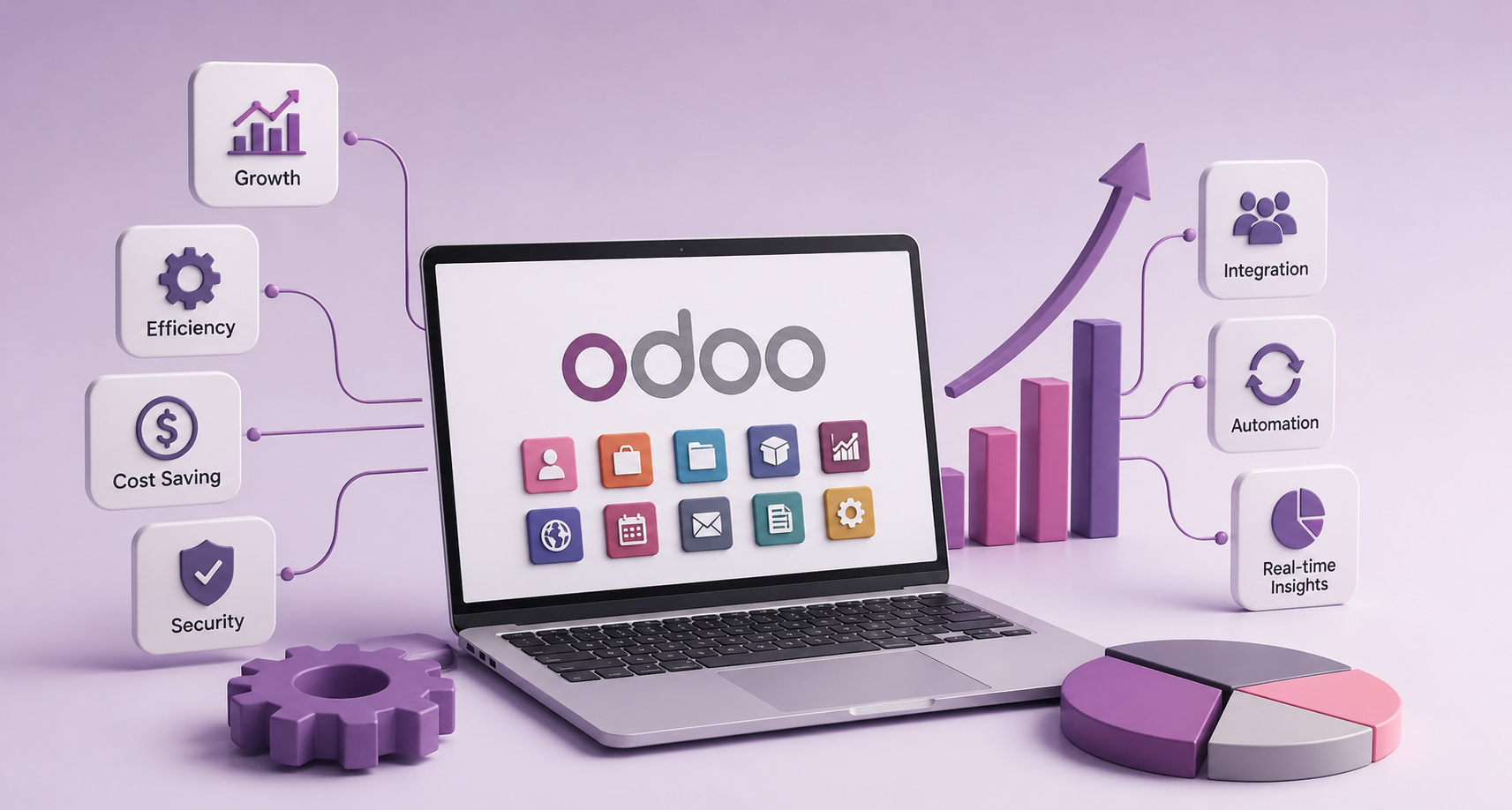
In today’s fast-moving digital economy, businesses are under constant pressure to operate more efficiently, reduce costs, and deliver better customer experiences. Traditional management systems and disconnected software tools are no longer enough to keep up with modern demands. This is where ERP (Enterprise Resource Planning) systems come in—and among them, Odoo has emerged as one of the most popular and flexible choices for businesses of all sizes.
From startups to large enterprises, companies are increasingly switching to Odoo ERP because it offers a complete, integrated, and cost-effective solution to manage every aspect of business operations. But what exactly makes Odoo so powerful? And why are so many organizations migrating to it?
Let’s explore the key reasons behind this shift and uncover the major benefits that make Odoo ERP a game-changer.
Top Benefits Businesses Are Switching to Odoo ERP Today
All-in-One Business Management System
One of the biggest reasons businesses are switching to Odoo ERP is its all-in-one structure. Instead of using multiple software tools for accounting, sales, HR, inventory, and customer management, Odoo brings everything into a single platform.
This unified system eliminates data silos and ensures that all departments are connected in real time. For example, when a sales order is created, inventory is automatically updated, invoices are generated, and accounting records are synced without manual input.
This seamless integration helps businesses:
- Reduce human errors
- Save time on repetitive tasks
- Improve communication between departments
- Maintain accurate, real-time data
In short, Odoo simplifies complexity by centralizing operations into one smart ecosystem.
Cost-Effective ERP Solution
Traditional ERP systems are often expensive to implement and maintain. They require heavy licensing fees, complex customization, and long deployment cycles. Odoo, on the other hand, is known for being highly cost-effective.
Its open-source nature allows businesses to start small and scale gradually. Companies can choose only the modules they need and expand over time as their operations grow.
This flexibility significantly reduces upfront investment and ongoing costs. Small and medium-sized businesses, in particular, benefit from Odoo because they can access enterprise-level functionality without breaking their budget.
Highly Modular and Scalable Architecture
Another major advantage of Odoo ERP is its modular design. Instead of forcing businesses to adopt a rigid system, Odoo allows them to build their ERP environment step by step.
It offers a wide range of modules, including:
- Sales and CRM
- Inventory management
- Accounting and finance
- Human resources
- Manufacturing
- E-commerce
- Marketing automation
Businesses can start with just one module, such as CRM, and gradually add more as needed. This scalability makes Odoo suitable for startups, growing companies, and large enterprises alike.
As business needs evolve, Odoo evolves with them—without requiring a complete system overhaul.
User-Friendly Interface
ERP systems are often criticized for being complex and difficult to use. Odoo breaks this stereotype with its clean, modern, and intuitive interface.
The platform is designed with usability in mind, making it easy for employees at all levels to navigate and operate. Whether it’s generating reports, managing orders, or tracking inventory, tasks can be performed with minimal training.
This ease of use leads to:
- Faster employee adoption
- Reduced training costs
- Higher productivity
- Fewer operational mistakes
A system is only effective if people use it—and Odoo ensures that users actually enjoy working with it.
Automation That Saves Time
Automation is one of the most powerful features of modern ERP systems, and Odoo excels in this area.
Businesses often spend a significant amount of time on repetitive administrative tasks such as invoicing, email follow-ups, report generation, and inventory updates. Odoo automates many of these processes, freeing up employees to focus on higher-value work.
For example:
- Sales orders can automatically generate invoices
- Inventory levels can trigger reordering alerts
- Customer follow-ups can be scheduled automatically
- Financial reports can be generated in real time
This level of automation not only improves efficiency but also reduces the risk of human error.
Real-Time Data and Reporting
In business, decision-making depends on accurate and timely data. Odoo provides real-time reporting across all modules, giving managers and executives full visibility into operations.
With just a few clicks, users can access:
- Sales performance dashboards
- Financial reports
- Inventory status
- Employee productivity metrics
- Customer behavior insights
This helps businesses make informed decisions faster and respond quickly to market changes. Instead of relying on outdated reports or fragmented data, Odoo provides a single source of truth.
Strong Integration Capabilities
Modern businesses rely on multiple digital tools, from payment gateways to e-commerce platforms and third-party applications. Odoo integrates seamlessly with many external systems, ensuring smooth data flow across platforms.
It also supports APIs and custom integrations, making it highly adaptable to unique business needs. Whether a company uses Shopify, PayPal, or custom software, Odoo can connect and synchronize data efficiently.
This flexibility ensures that businesses don’t need to replace their entire tech stack when adopting Odoo—they can simply integrate it into their existing ecosystem.
Improved Collaboration Across Teams
One of the hidden benefits of ERP systems is improved teamwork. Odoo enhances collaboration by providing a centralized platform where all departments can access and share information.
For example:
- Sales teams can view inventory levels in real time
- Finance teams can track sales and expenses instantly
- HR can monitor employee performance data
- Managers can oversee all operations from a single dashboard
This eliminates communication gaps and ensures that everyone is working with the same updated information.
Customization and Flexibility
Every business is unique, and Odoo understands this well. One of its strongest advantages is its high level of customization.
Companies can modify workflows, dashboards, reports, and even develop custom modules to meet specific requirements. Developers can extend Odoo’s functionality using its open-source framework, making it highly adaptable to different industries such as retail, manufacturing, healthcare, education, and more.
This flexibility ensures that businesses are not forced into a “one-size-fits-all” system but instead get a tailored ERP solution.
Cloud and On-Premise Deployment Options
Odoo offers both cloud-based and on-premise deployment options, giving businesses complete control over how they want to run their ERP system.
- Cloud deployment: Ideal for businesses that want quick setup, remote access, and minimal IT maintenance.
- On-premise deployment: Suitable for companies that require full control over data security and infrastructure.
This flexibility allows organizations to choose a deployment model that best fits their operational and security needs.
Enhanced Customer Relationship Management
Customer experience is a key factor in business success. Odoo’s CRM module helps businesses manage leads, track customer interactions, and improve sales performance.
With features like automated follow-ups, lead scoring, and pipeline tracking, businesses can build stronger relationships with customers and increase conversion rates.
A well-managed CRM system ensures that no opportunity is missed and every customer interaction is optimized.
Continuous Growth and Community Support
Odoo has a large global community of developers, partners, and users who continuously contribute to its development. This means the platform is constantly improving with new features, security updates, and enhancements.
Businesses benefit from:
- Regular updates
- Active community support
- Extensive documentation
- Professional partner network
This ecosystem ensures that Odoo remains future-ready and highly reliable.
Conclusion
The shift toward digital transformation is accelerating, and businesses can no longer rely on fragmented systems to manage their operations. ERP systems like Odoo offer a complete solution that brings together efficiency, scalability, and cost-effectiveness.
From automation and real-time reporting to modular architecture and seamless integration, Odoo provides everything modern businesses need to stay competitive.
📂 Categories
- Web developer